

Marketing ROI Starts With Better Data
Marketing leaders make bigger decisions with shakier data. Old analytics models built around browser tracking are losing ground. Privacy laws raise the stakes for noncompliance, and disconnected systems make it harder to tie marketing activity to revenue. Standard analytics often leaves out too much of the real buyer journey. GDPR sets detailed requirements for how organizations collect, store, and manage personal data, including for some organizations outside the EU that target people in the EU. California’s CCPA gives consumers rights to know, delete, and opt out of the sale or sharing of personal information.
Those data gaps impact more than just reporting; they influence budget decisions, campaign planning, and leadership’s trust in marketing ROI. Clarifying this helps marketing leaders recognize the need for reliable data foundations.
Why Data Is Less Reliable
The challenge is not a lack of numbers. The challenge is that the numbers often leave out too much context.
Dashboards still fill up with charts. Ad platforms still report conversions. Analytics tools still track sessions and events. None of that guarantees a clear or complete view of performance. When data collection is limited, fragmented, or inconsistent, reporting can look polished while the real picture stays incomplete.
Marketing leaders feel that pressure directly. According to Deloitte’s 2025 CMO Survey, CMOs focus on profitability, AI, and operational leadership. The bar is higher, requiring marketers to clearly connect marketing activity to business results.
Old Analytics Models Are Losing Ground
What’s Changing
Privacy laws are one reason. GDPR and CCPA do more than change marketing
workflows. They create real compliance exposure when companies get data practices wrong. GDPR sets detailed rules for collecting, storing, and managing personal data, while the CCPA gives California consumers more control over the personal information businesses collect about them. California also maintains regulations that guide how businesses must handle consumer requests and inform consumers of their rights.
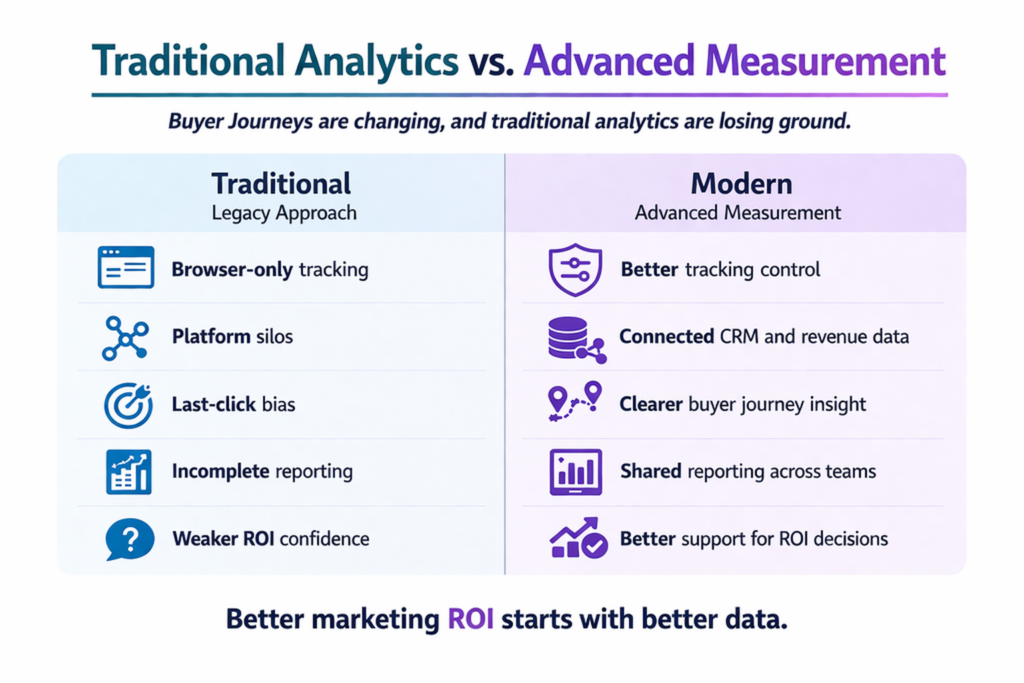
Browser-based tracking is another reason. Consent choices, blocked scripts, device switching, and gaps between platforms can all reduce the amount of data browser tracking captures. Even when tags appear to be working, the data may still tell only part of the story.
Discovery is shifting, and buyers now do more research before they become measurable site visits. Recognizing this helps marketing managers feel more in control and better prepared to adapt strategies to changing buyer behaviors.
Why It Matters
When the buyer journey is less visible, marketing leaders can no longer rely on standard browser tracking alone to provide the clarity needed for budget investment decisions.
That creates a familiar tension for B2B teams. Leadership still wants clear answers about ROI, pipeline, and channel performance. Marketing still has to recommend budgets and explain results. The missing context sits between those two realities.
A Smarter Approach
Treating browser data as a single input, not the whole story, is a smarter way to gather visitor behavior data.
Connecting analytics to other business systems, rather than relying solely on a single platform’s version of the truth, helps marketing leaders gain a complete view and make informed decisions.
Why B2B Marketing Teams Feel It First
The path to revenue is rarely simple.
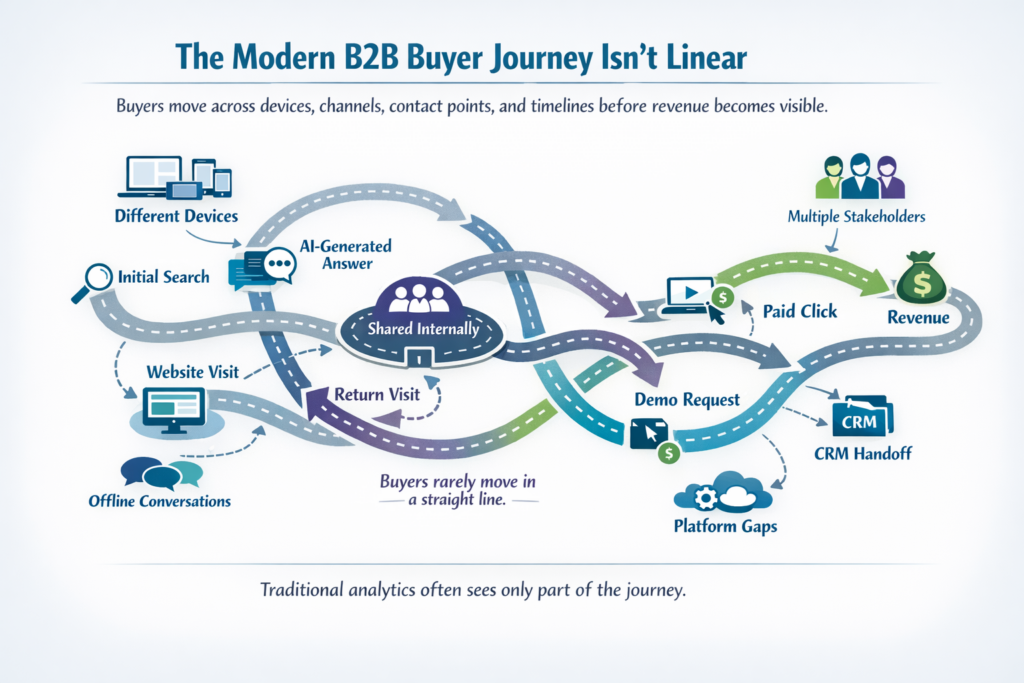
A potential buyer may first find your company in an initial search with an AI agent, then return through a branded search, share your site internally, click a paid ad, join a demo, and move into the pipeline weeks or months later. Sales conversations, CRM stages, and offline touchpoints all shape the outcome. Standard analytics often struggles to hold that journey together.
For CEOs, the issue is confidence. They want to know whether marketing is supporting the sales pipeline, growth, and smarter investment.
For marketing managers and directors, the issue is proof. They still have to explain results, recommend budget choices, and defend spending, even when reporting gaps are outside their control. Deloitte’s latest CMO Survey reinforces the broader pressure on marketing leaders as they simultaneously navigate profitability and accountability.
Where Standard Tracking Falls Short
Traditional tracking can still show useful patterns. It can highlight channel trends, campaign engagement, and conversion activity. It starts to break down when leadership asks bigger questions.
Which channels help drive a qualified pipeline, not just visits? Which campaigns influence deals over time? Where do leads stall between form fill and sales follow-up? Why do GA4, ad platform reports, and CRM data point in different directions?
Those questions are tougher to answer because B2B buying journeys involve repeat visits, multiple stakeholders, delayed decisions, and multiple sources of truth. Last-click reporting makes this worse by giving too much credit to the final touch and hiding the earlier marketing work that built awareness, trust, and intent.
Traffic Tells Less of the Story
Website traffic still matters. It just says less on its own.
A buyer can see your brand, compare vendors, read third-party content, or get useful answers before ever landing on your site. In that environment, traffic becomes a weaker stand-alone signal of marketing impact.
The buyer journey also changes how your content should be judged. Broad traffic alone is not enough. The stronger play is to show up for specific, high-intent questions and then connect that visibility to lead quality, pipeline movement, and revenue.
Long-tail topics (terms with lower volume yet indicate buyers are closer to a decision) still matter here. Not because they promise easy clicks, but because they often reveal stronger intent and clearer buying questions.
Marketing ROI Needs Better Data
When data gets thinner or less consistent, the answer is not to chase every metric. The answer is to improve the foundation underneath the reporting.
A stronger data foundation should enable your team to capture the right signals, close gaps between systems, and connect marketing activity to sales outcomes. This supports smarter investment decisions and clearer ROI communication.
This is where many companies need to rethink analytics. It is not just a reporting function. It supports budget decisions, campaign planning, and how confidently a team can speak to ROI.
What a Stronger Analytics Setup Looks Like
What’s Changing
Analytics alone no longer clearly explain B2B marketing performance.
Marketing data now lives in separate systems. Analytics sits in one place. Ad platform reporting sits in another. CRM and revenue data often sit somewhere else entirely. When those systems stay disconnected, the team ends up spending too much time debating numbers and too little time acting on them.
Why It Matters
Disconnected data makes it harder to prove marketing ROI. HubSpot’s marketing reporting materials describe multi-touch revenue attribution and customer journey analytics as ways to connect marketing touchpoints to deals and revenue, and to understand complex customer journeys. That supports the larger point here: website analytics alone is not enough for a long B2B sales cycle. Teams need connected CRM and revenue data to understand what marketing is really contributing.
A Smarter Approach
A smarter approach starts with a cleaner GA4 setup, clearer conversion definitions, and stronger alignment between analytics, CRM, and revenue reporting.
Server side tracking can support that effort, but it does not need to dominate the conversation. The real point is simpler: when browser-only tracking becomes less dependable, teams need more control over how data is collected, shared, and used.
Attribution Starts With Data Quality
Attribution can help. It can only work with the data it receives.
Many teams jump too quickly to the question of which attribution model to use. That debate matters less if the underlying collection is weak.
If your analytics setup misses key touches, your CRM is disconnected from marketing activity, or consent limits create gaps, the model will still have blind spots. A more advanced attribution model does not fix poor inputs. It just spreads credit across incomplete ones.
Better Data Changes the Conversation
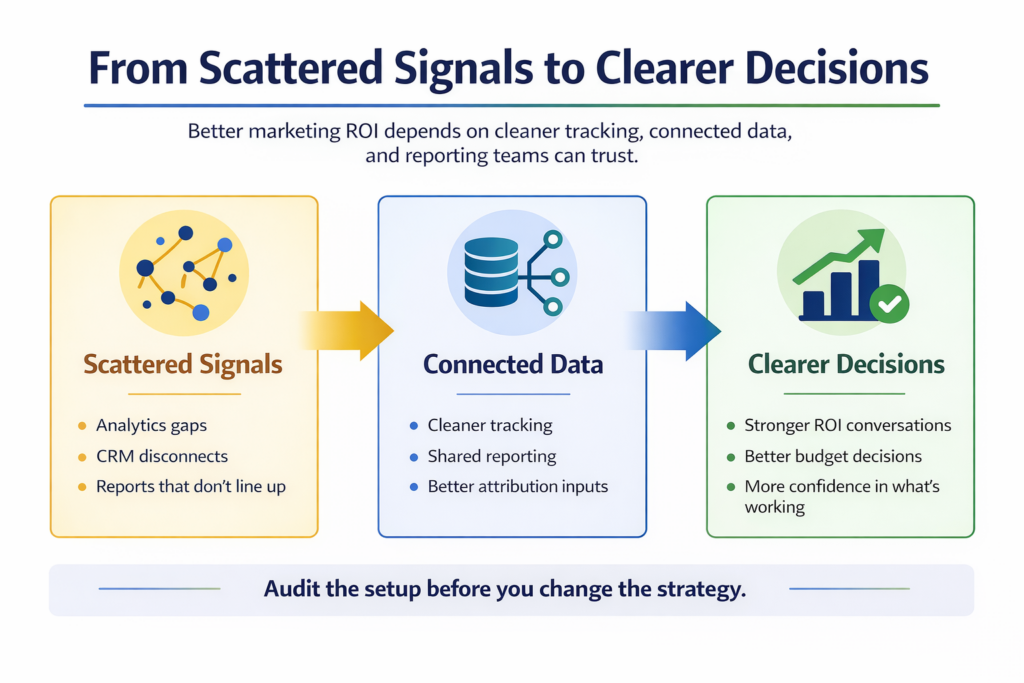
Better data does more than improve reporting. It gives marketing leaders a stronger case for budget decisions, clearer conversations with sales, and more confidence when leadership asks what is working.
Savvy marketers need data-driven partners to close that gap. The right partner helps fix weak tracking, connect analytics with CRM and revenue data, and turn scattered reporting into something leadership can actually use.
Signs Your Data Needs Work
What You’re Seeing
- Significant discrepancies between GA4, ad platforms, and CRM reporting
- No shared dashboard (single point of truth) that leadership, marketing, and sales trust
- Lead sources that feel unclear, inflated, or inconsistent
- Too much direct traffic without a clear explanation
- Reporting changes depending on who pulls it
- Plenty of activity metrics, but limited visibility into pipeline impact
What It Often Means
These are signs that the current setup may not support the decisions your team needs to make.
Tracking gaps, disconnected systems, and weak reporting logic can all create false confidence. The data may look complete on the surface, yet still miss the context leadership needs.
What To Do Next
Before changing channel mix, revising budgets, or asking for more leads, audit the setup first.
That gives your team a clearer view of where tracking breaks down, where reporting loses trust, and what needs to be fixed before strategy can improve.
Before Changing Strategy, Audit the Setup
If your team is making budget or campaign decisions with incomplete data, the first move is not another dashboard or a new reporting template.
The first move is to audit the setup.
A strong GA4 audit shows where tracking breaks down, where data sources fail to line up, and where reporting is likely leading your team in the wrong direction. It should also help you prioritize fixes in a way that leadership can understand and marketing can use.
From there, a shared reporting view becomes more valuable because it rests on a stronger foundation. When reliable data gets harder to collect and harder to trust, better marketing ROI starts with better data.
Ready to Finally Trust Your Marketing Data?
Let’s talk about your current Analytics challenges and where to focus first.
Schedule your free, no-pressure strategy call.